International Journal of Spine Research
Neurological Recovery Following Surgical Treatment of Spinal Tuberculosis: A Prospective Cohort Study
Spine Surgery Unit, Department of Clinical Services, National Orthopaedic Hospital, Dala, Kano, Nigeria
Author and article information
Cite this as
Shobode M. Neurological Recovery Following Surgical Treatment of Spinal Tuberculosis: A Prospective Cohort Study. Int J Spine Res. 2026; 8(1): 1-8. Available from: 10.17352/ijsr.000027
Copyright License
© 2026 Shobode M. This is an open-access article distributed under the terms of the Creative Commons Attribution License, which permits unrestricted use, distribution, and reproduction in any medium, provided the original author and source are credited.Background: Surgical treatment of spinal tuberculosis has been shown to improve neurological and radiological outcomes; however, the extent to which these improvements translate into clinically meaningful recovery remains unclear. The determinants of such recovery, particularly the role of preoperative neurological status, are not well defined.
Methods: Fifty-two patients with spinal tuberculosis undergoing surgical treatment at a tertiary referral center were prospectively followed. Patient-reported outcomes were assessed using the Oswestry Disability Index (ODI) and the 36-Item Short Form Health Survey (SF-36). Clinically meaningful improvement was defined using established MCID thresholds (ODI ≥12.8; SF-36 ≥2.7).
Results: The mean improvement in ODI was 28.4 ± 5.5 points, with all patients (100%) achieving MCID. The mean improvement in SF-36 was 11.1 ± 5.2 points, with 92.3% achieving MCID. Neurological improvement of at least one ASIA grade occurred in 96.2% of patients, while 3.8% experienced deterioration. All patients with preoperative ASIA D achieved complete recovery to ASIA E, whereas patients with ASIA C demonstrated heterogeneous outcomes and accounted for all cases of deterioration. On multivariable analysis, preoperative ASIA grade C was independently associated with lower odds of achieving SF-36 MCID (OR 0.03, 95% CI 0.001–0.88; p = 0.042). Radiological parameters, including kyphotic angle and vertebral involvement, were not independently associated with clinically meaningful recovery.
Conclusion: Surgical treatment of spinal tuberculosis results in high rates of clinically meaningful functional and neurological recovery. However, improvement in overall quality of life is not universal and is primarily determined by preoperative neurological status.
Level of Evidence: II
Spinal tuberculosis remains the most common form of musculoskeletal tuberculosis and a leading cause of spinal deformity, neurological deficit, and long-term disability, particularly in low- and middle-income countries. [1-3] The disease is characterized by progressive vertebral destruction, spinal instability, and potential spinal cord compression, with delayed presentation frequently resulting in kyphotic deformity and irreversible neurological impairment. [4–6] Despite advances in antimicrobial therapy and imaging, a significant proportion of patients continue to present with advanced disease requiring surgical intervention. [7-9]
Surgical treatment plays a critical role in the management of spinal tuberculosis, particularly in the presence of neurological deficit, instability, or progressive deformity. [4,10,11] Prior studies have consistently demonstrated that surgery can achieve satisfactory neurological recovery and deformity correction. [4-6,10,26] However, most outcome assessments have focused on radiological parameters and neurological grading systems, with comparatively limited emphasis on patient-centered measures of recovery. [12-14] As a result, the extent to which surgical intervention translates into meaningful improvement in patients’ daily function and overall quality of life remains incompletely understood.
Patient reported outcome measures such as the Oswestry Disability Index and the 36-Item Short Form Health Survey are now widely used to evaluate disability and health-related quality of life in spine research. [12,15,16] While these instruments demonstrate overall improvement following treatment, reporting mean changes alone does not necessarily reflect whether patients experience clinical benefit.[17-19] The concept of minimal clinically important difference addresses this limitation by defining the smallest change in an outcome that is perceived as beneficial by patients.[17,18] This approach provides a more clinically relevant interpretation of treatment effectiveness and has become increasingly important in contemporary spine outcomes research.[19-21].
Although minimal clinically important difference thresholds have been widely applied in degenerative spine conditions, their use in spinal tuberculosis remains limited. [20–22] Furthermore, the determinants of meaningful recovery in this population are not well defined. In particular, the relationship between neurological status at presentation and patient-reported recovery remains poorly understood, despite its potential importance in guiding treatment decisions and prognostication. [6,11,23].
In addition, recovery following spinal tuberculosis is likely to be multidimensional, encompassing functional improvement, neurological recovery, and broader health-related quality of life. [24,25] Domain-specific analysis of quality of life may provide further insight into patterns of recovery that are not captured by global summary scores alone. [13,24] Understanding these dimensions of recovery is especially important in resource-constrained settings, where delayed presentation is common and optimizing the timing and effectiveness of intervention is critical.
The aim of this study was therefore to evaluate clinically meaningful recovery following surgical treatment of spinal tuberculosis using minimal clinically important difference thresholds for disability and quality of life, to characterize patterns of neurological recovery, and to identify independent predictors of achieving meaningful improvement.
Methods
Study design and setting
This was a prospective cohort study conducted between January 2021 and December 2023 at a tertiary orthopaedic referral centre in Nigeria specializing in the management of spinal disorders. The institution serves as a regional referral hub for complex spine pathology, including infectious, traumatic, and degenerative conditions. Ethical approval was obtained from the institutional review board, and all participants provided informed consent.
Study population
All consecutive patients presenting with spinal tuberculosis during the study period were screened for eligibility. Diagnosis was established based on clinical presentation, radiological findings, and, where available, microbiological or histopathological confirmation.
Given the tertiary referral nature of the institution and the focus on surgical outcomes, the cohort represents a surgically selected population, enriched for patients with neurological deficit, spinal instability, significant deformity, or failure of nonoperative management.
Inclusion criteria were patients with confirmed spinal tuberculosis who underwent surgical treatment and had complete baseline and follow-up patient-reported outcome measures. Patients with incomplete outcome data or prior spinal surgery for unrelated pathology were excluded. Because of the relatively low incidence of surgically treated spinal tuberculosis at our institution, all consecutive eligible patients presenting during the study period were enrolled. No formal a priori sample size calculation was performed. The study should therefore be regarded as exploratory and hypothesis-generating, although consecutive recruitment was intended to minimize selection bias.
Clinical and radiological assessment
Baseline data collected included age, sex, duration of symptoms, and neurological status at presentation. Neurological function was assessed using the American Spinal Injury Association (ASIA) impairment scale.
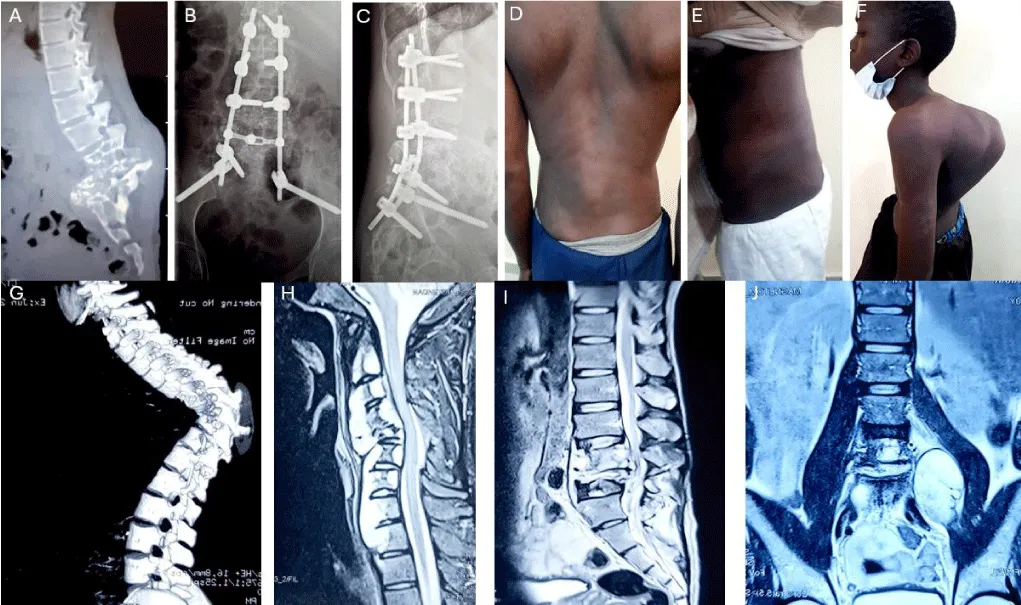
Radiological evaluation included plain radiographs, computed tomography (CT), and magnetic resonance imaging (MRI), as clinically indicated. Variables recorded included spinal level of involvement, number of vertebral segments affected, presence of paravertebral or psoas abscesses, vertebral destruction, and magnitude of kyphotic deformity measured using the Cobb method. Representative preoperative and postoperative radiological findings from the study cohort are presented in Figure 7.
Treatment protocol
All patients received standard antituberculous chemotherapy in accordance with national treatment guidelines. Surgical intervention was performed in patients with established indications, including neurological deficit, spinal instability, significant or progressive deformity, and failure of nonoperative treatment.
Procedures were performed by fellowship-trained spine surgeons and included decompression, deformity correction, and stabilization using posterior, anterior, or combined approaches as indicated.
Outcome measures
Patient-Reported Outcomes: Patient reported outcomes were assessed using the Oswestry Disability Index (ODI) and the 36-Item Short Form Health Survey (SF-36) at baseline and follow-up. Change scores were calculated as the difference between baseline and follow-up values.
Clinically meaningful improvement was defined using established minimal clinically important difference thresholds as follows: ODI improvement ≥12.8 points and SF-36 improvement ≥2.7 points. Binary variables indicating achievement of minimal clinically important difference were generated for each outcome.
Neurological outcomes
Neurological status was assessed preoperatively and postoperatively using the ASIA impairment scale. Neurological improvement was defined as an increase of at least one ASIA grade, while deterioration was defined as a decrease of at least one grade.
Transitions between preoperative and postoperative ASIA grades were analyzed using cross-tabulation and visualized using an alluvial diagram to illustrate patterns of neurological recovery.
Domain-specific quality of life
Domain-level analysis of the SF-36 was performed to evaluate differential recovery across health domains, including physical functioning, role limitation, bodily pain, general health, vitality, and mental health. Domain-level SF-36 impairment proportions were derived from aggregated domain scores.
Statistical analysis
Continuous variables were assessed for normality using the Shapiro–Wilk test and are presented as mean ± standard deviation or median with interquartile range, as appropriate. Categorical variables are presented as frequencies and percentages. Between-group comparisons were performed using the Student t test or Mann–Whitney U test for continuous variables and the chi-square test or Fisher exact test for categorical variables, as appropriate.
Given that all patients achieved minimal clinically important difference (MCID) for the Oswestry Disability Index, regression analysis was performed using achievement of MCID for the 36-Item Short Form Health Survey (SF-36) as the primary outcome. Because disease-specific MCID thresholds have not been established for spinal tuberculosis, published thresholds derived from spine surgery and degenerative spine populations were applied. These thresholds have been widely used in spine outcomes research and provide a framework for interpreting patient-reported outcomes.
Multivariable logistic regression was used to identify independent predictors of meaningful recovery. Due to the small number of non-events, Firth penalized logistic regression was employed to reduce small-sample bias. Covariates entered into the model included age, duration of symptoms, preoperative kyphotic angle, number of vertebral levels involved, and preoperative neurological status.
Model assumptions were assessed, including multicollinearity (variance inflation factor) and goodness-of-fit diagnostics. Results are reported as adjusted odds ratios (OR) with 95% confidence intervals (CI).
Model discrimination was evaluated using the area under the receiver operating characteristic curve (AUC), and calibration was assessed using the Hosmer–Lemeshow goodness-of-fit test.
All statistical analyses were performed using Stata version 19 (StataCorp LLC, College Station, TX, USA). A two-sided p-value < 0.05 was considered statistically significant.
Results
Cohort characteristics
A total of 61 patients underwent surgical treatment for spinal tuberculosis during the study period. Of these, 7 patients were lost to follow-up, leaving 52 patients available for final analysis.
The mean age of the cohort was 29.8 ± 8.6 years, and 41 patients (78.8%) were male. The median duration of symptoms before presentation was 29.5 months (interquartile range 23.8–36.0), reflecting a prolonged disease course. All patients presented with a neurological deficit at baseline.
Preoperative neurological status was distributed as follows: ASIA B in 7 patients (13.5%), ASIA C in 21 patients (40.4%), and ASIA D in 24 patients (46.2%). Radiologically, the median number of vertebral levels involved was 2 (interquartile range 2–2), and the mean preoperative kyphotic angle was 39.3 ± 14.3 degrees. Thoracic and thoracolumbar regions were the most affected (Table 1).
Clinical outcomes
Improvement was observed in both disability and health-related quality of life following treatment.
The mean improvement in Oswestry Disability Index (ODI) was 28.4 ± 5.5 points, with all patients (52/52, 100%) achieving minimal clinically important difference (MCID). The mean improvement in the 36-Item Short Form Health Survey (SF-36) was 11.1 ± 5.2 points, with 48 of 52 patients (92.3%) achieving MCID (Table 2).
The distribution of change scores demonstrated that all patients exceeded the MCID threshold for ODI, whereas a small proportion did not achieve the threshold for SF-36 despite overall improvement (Figure 1). No perioperative mortality was recorded.
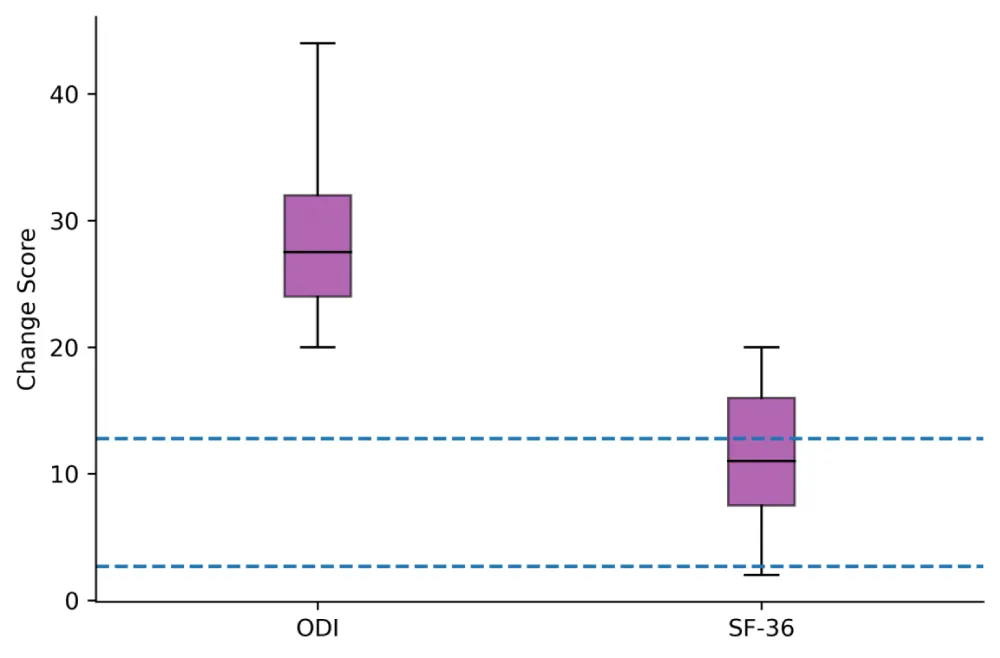
Boxplots demonstrate the distribution of change scores for the Oswestry Disability Index (ODI) and the 36-Item Short Form Health Survey (SF-36). Dashed horizontal lines represent minimal clinically important difference (MCID) thresholds (ODI ≥12.8, SF-36 ≥2.7).
Neurological outcomes
Neurological recovery was observed in the majority of patients. Overall, 50 of 52 patients (96.2%) improved by at least one ASIA grade, while 2 patients (3.8%) experienced neurological deterioration.
Among patients with preoperative ASIA B, 4 (57.1%) improved to ASIA C and 1 (14.3%) to ASIA D, while 2 (28.6%) remained unchanged. Among those with preoperative ASIA C, 10 patients (47.6%) improved to ASIA D and 9 (42.9%) to ASIA E. However, 2 patients (9.5%) deteriorated, with one declining to ASIA B and another to ASIA A. All patients with preoperative ASIA D (n = 24) improved to ASIA E (100%), representing complete neurological recovery in this subgroup. Complete neurological recovery (ASIA E) was achieved in 33 patients (63.5%), including all patients who presented with ASIA D. In contrast, neurological deterioration occurred exclusively among patients presenting with ASIA C.
The distribution of neurological transitions is summarized in Table 3 and illustrated in Figure 2.
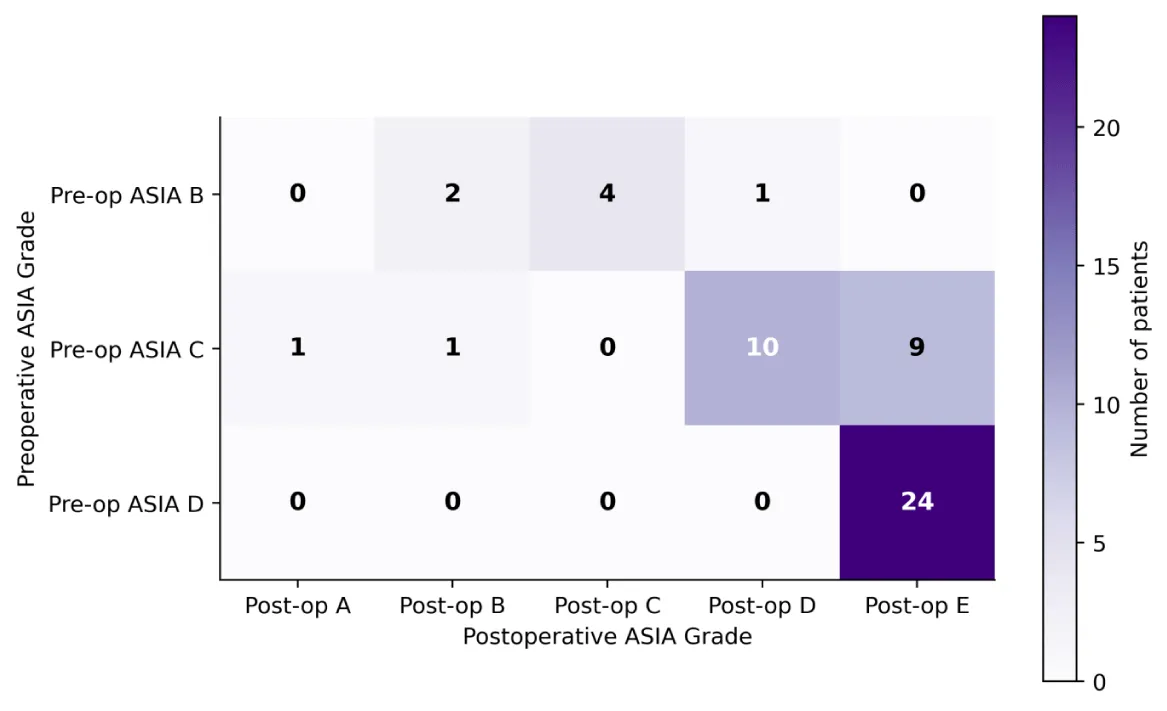
Values are presented as the number of patients. Rows represent preoperative ASIA grades and columns represent postoperative ASIA grades. Neurological improvement was defined as an increase of at least one ASIA grade, while deterioration was defined as a decrease of at least one grade.
Heatmap illustrating transitions between preoperative and postoperative American Spinal Injury Association (ASIA) impairment grades. Rows represent preoperative ASIA grades, and columns represent postoperative ASIA grades. Cell values indicate the number of patients in each transition category, with color intensity corresponding to frequency. Improvement is reflected by transitions toward higher ASIA grades, while deterioration is represented by transitions toward lower grades.
Domain-specific quality of life
Domain-level analysis of SF-36 demonstrated heterogeneous impairment across health domains. The most affected domains were vitality (37%), physical functioning (34%), and mental health (34%), whereas bodily pain (29%) and general health (30%) were less affected (Table 2, Figure 3).
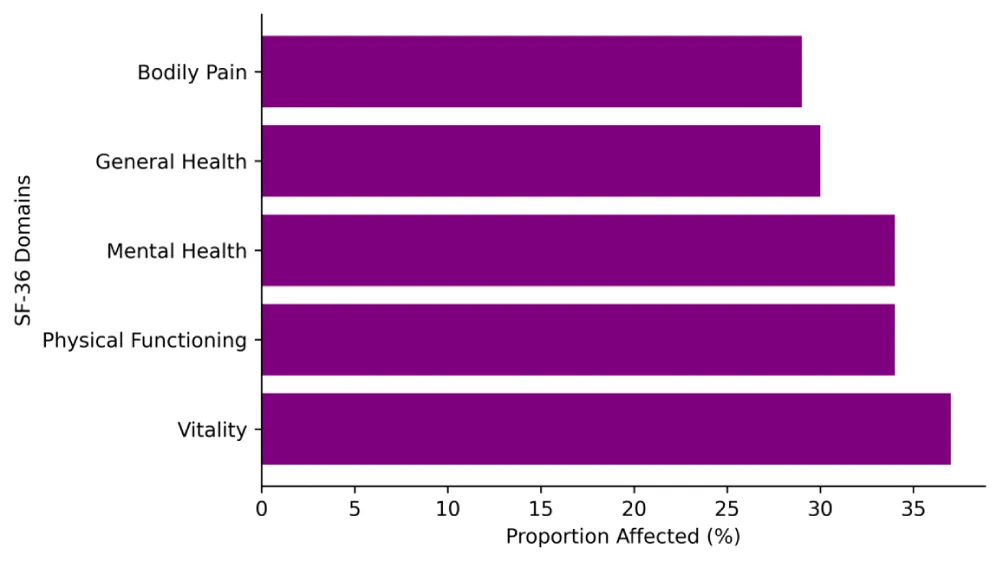
Horizontal bar chart demonstrating the proportion of patients with impairment across SF-36 domains. Vitality, physical functioning, and mental health were the most affected domains, indicating a multidimensional impact of disease beyond pain.
Outcomes stratified by preoperative neurological status
Clinical outcomes varied according to preoperative neurological status. Patients with ASIA C demonstrated lower rates of clinically relevant improvement in SF-36 compared with other groups.
While all patients with ASIA B and D achieved SF-36 MCID (100%), only 81.0% of patients with ASIA C achieved meaningful recovery. In contrast, SF-36 change scores were highest among patients with ASIA D (mean 14.0), followed by ASIA C (8.8) and ASIA B (8.0). ODI improvement was greatest in ASIA B and lowest in ASIA D (Table 4).
The probability of achieving patient-centered recovery stratified by preoperative neurological status is shown in Figure 4.
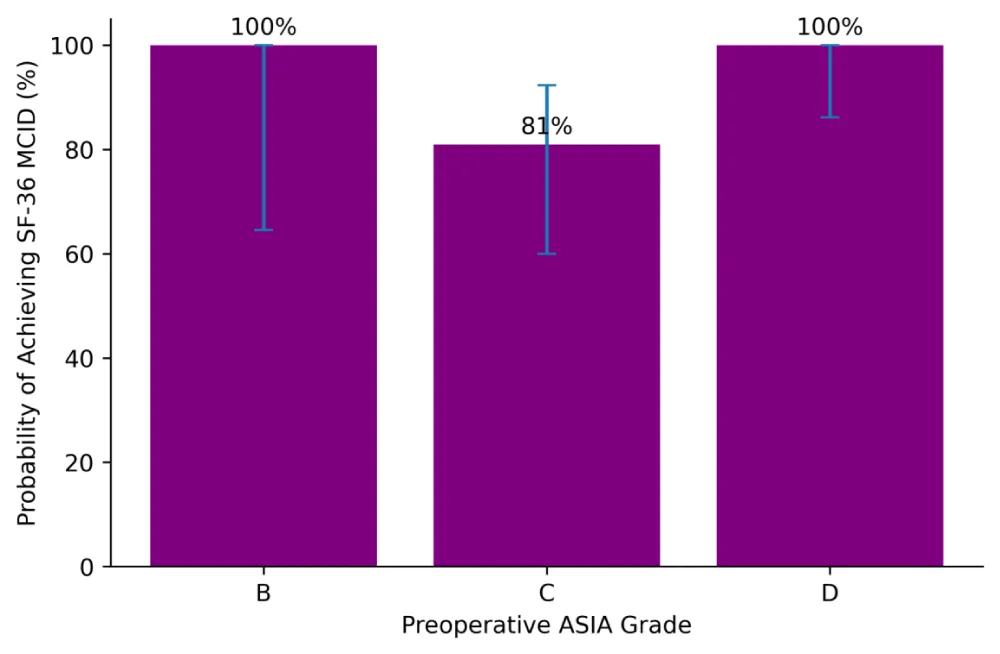
Bar chart demonstrating the proportion of patients achieving minimal clinically important difference (MCID) in SF-36 across preoperative American Spinal Injury Association (ASIA) grades.
Predictors of recovery
Multivariable analysis was performed using the achievement of the SF-36 MCID as the primary outcome.
On Firth penalized logistic regression, preoperative ASIA grade C was independently associated with lower odds of achieving functional recovery compared with other grades (odds ratio 0.03, 95% confidence interval 0.001–0.88; p = 0.042) (Table 5, Figure 5).
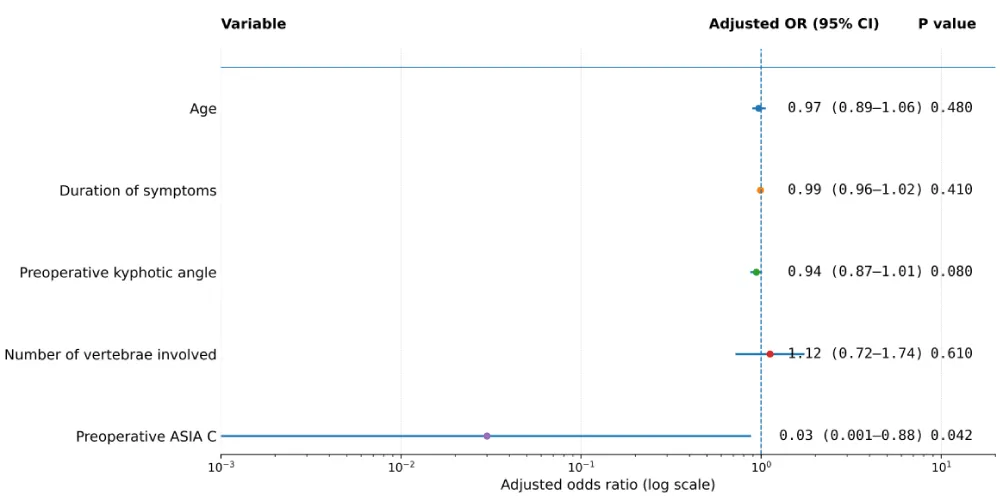
Forest plot showing adjusted odds ratios (OR) with 95% confidence intervals (CI) for predictors of achieving minimal clinically important difference in SF-36. The vertical dashed line represents the line of no effect (OR = 1). Preoperative ASIA grade C was independently associated with lower odds of recovery.
Age, duration of symptoms, number of vertebral levels involved, and preoperative kyphotic angle were not significantly associated with MCID achievement, although increasing kyphosis demonstrated a trend toward reduced odds of meaningful recovery.
Model performance
The predictive model demonstrated good discriminative ability, with an area under the receiver operating characteristic curve of 0.77 (Figure 6).
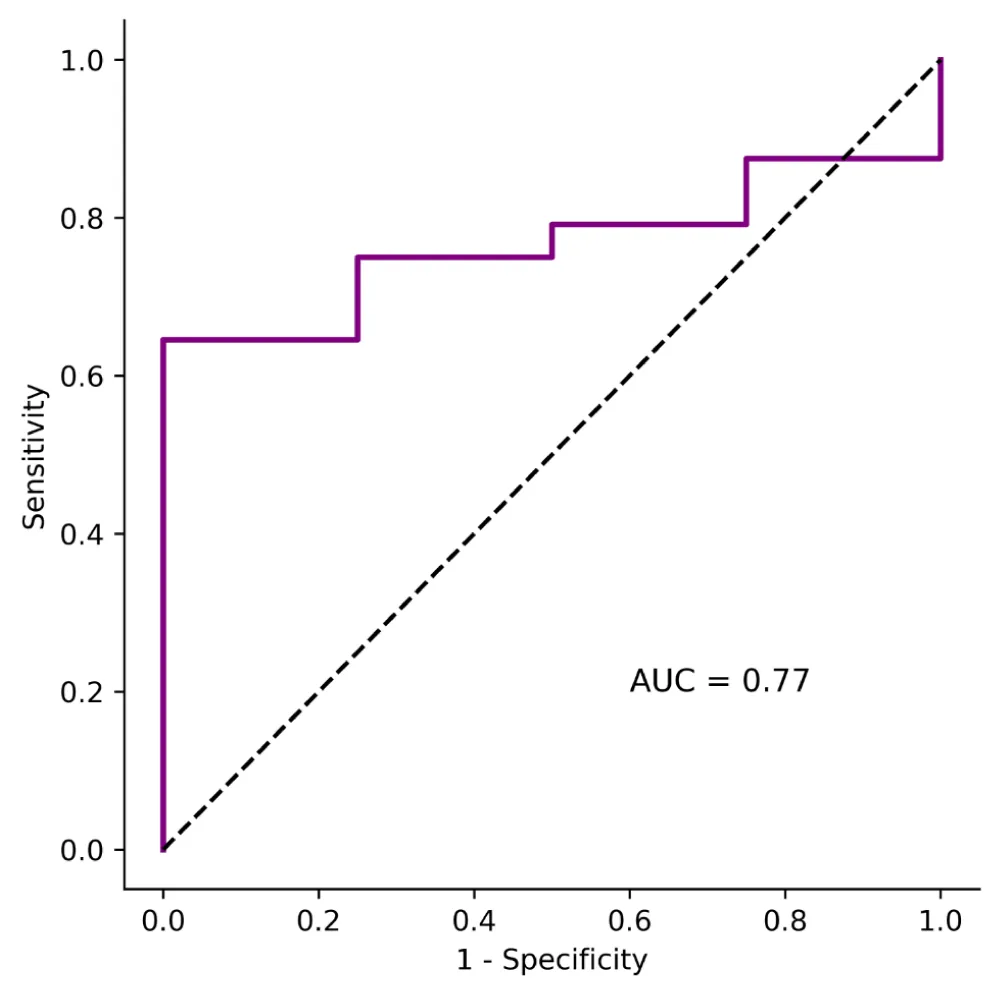
Receiver operating characteristic (ROC) curve demonstrating the discriminative ability of the multivariable model for predicting achievement of SF-36 MCID. The area under the curve (AUC) indicates excellent model performance.
Discussion
Principal findings
This prospective cohort study demonstrates that surgical treatment of spinal tuberculosis results in demonstrable improvement in disability and health-related quality of life. While all patients achieved minimal clinically important difference (MCID) for the Oswestry Disability Index, a smaller proportion achieved MCID for SF-36, indicating a divergence between functional recovery and overall quality-of-life restoration. Neurological recovery was observed in most patients, with over 96% improving by at least one ASIA grade. Preoperative neurological status emerged as the only independent predictor of SF-36 MCID recovery, with patients presenting in ASIA grade C demonstrating significantly lower odds of achieving meaningful improvement. These findings are consistent with prior reports of favorable neurological outcomes following surgical management of spinal tuberculosis. [4-6,10,23,26].
Clinical recovery: beyond mean improvement
The use of MCID thresholds provides a more patient-centered interpretation of recovery than mean change scores alone. Previous studies have reported improvements in ODI and SF-36 following surgery; however, reliance on average values may obscure variability at the individual level. [16-19]
In the present study, all patients achieved improvement in disability, suggesting that surgical intervention reliably restores functional capacity. In contrast, a smaller proportion achieved meaningful gains in overall quality of life. This discrepancy highlights that recovery in spinal tuberculosis extends beyond physical function and includes broader health perceptions that may recover more gradually or incompletely. [13,16,19].
Neurological recovery and the concept of a transitional state
Neurological recovery demonstrated a distinct pattern across ASIA grades. Patients with ASIA D showed uniform recovery, whereas those with ASIA B improved consistently but incompletely. In contrast, ASIA C patients exhibited variable trajectories, including both substantial improvement and the only instances of deterioration.
This heterogeneity suggests that ASIA C represents a transitional neurological state with less predictable outcomes. This may reflect a threshold between reversible and irreversible spinal cord injury, influenced by the interplay of compression, ischemia, and inflammatory processes. [11,20,23] The variability observed in this group supports its clinical relevance as a prognostic category and underscores the importance of timely intervention before progression to this stage. Similar observations regarding variability in neurological recovery after surgery have recently been reported in contemporary European cohorts. [27].
Determinants of patient-centered recovery
Preoperative neurological status was the sole independent predictor of achieving functional improvement in quality of life. Patients with ASIA grade C had markedly reduced odds of achieving SF-36 MCID compared with other groups.
In contrast, radiological parameters, including kyphotic deformity and extent of vertebral involvement, were not independently associated with recovery. Although increasing kyphosis showed a non-significant trend toward poorer outcomes, these findings reinforce that neurological function, rather than structural severity, is the primary determinant of patient-perceived recovery. These findings are consistent with previous studies identifying neurological status as one of the strongest determinants of postoperative recovery in spinal tuberculosis. [6,11,28]
Multidimensional impact of spinal tuberculosis
Analysis of SF-36 domains revealed that vitality, physical functioning, and mental health were most affected, whereas bodily pain and general health were less impacted. This pattern reflects the systemic and psychosocial burden of spinal tuberculosis.
Reduced vitality likely reflects chronic infection and prolonged illness duration, particularly in settings where delayed presentation is common. [7] Impairment in physical functioning is consistent with structural instability and neurological deficit. [4,6] The impact on mental health highlights the psychological burden associated with chronic disability and prolonged treatment, particularly in resource-limited environments. [24] These are similar to the multisystem effects of spinal TB described in recent comprehensive reviews. [30]
The relatively lower impact on pain suggests that spinal tuberculosis is not primarily pain-driven, but rather a condition characterized by complex functional and systemic impairment. [13,25]
Relevance of representative imaging findings
The representative clinical and radiological images presented in Figure 7 complement the quantitative findings by illustrating the advanced disease severity encountered in this cohort. Extensive vertebral destruction, severe kyphotic deformity, multilevel involvement, paravertebral and psoas abscess formation, and profound neurological compromise were common indications for surgical intervention, consistent with the spectrum of advanced spinal tuberculosis described in previous studies. [29,30]
Despite the complexity of these presentations, substantial neurological and functional recovery was achieved in most patients following decompression, deformity correction, and spinal stabilization. These findings underscore the potential benefits of timely surgical management while emphasizing the importance of early diagnosis and referral before irreversible neurological injury and severe spinal deformity develop. [11,26,29] This message is particularly relevant in low- and middle-income countries, where delayed presentation remains common, and access to specialist spine care is often limited. [7,29,30]
Clinical implications
These observations support current recommendations advocating individualized surgical treatment guided by neurological status and spinal stability in patients with spinal TB. [29] The strong influence of preoperative neurological status emphasizes the importance of early diagnosis and timely surgical management, particularly before progression to intermediate states such as ASIA C.
The observed gap between functional recovery and quality-of-life improvement highlights the need for comprehensive postoperative care, including rehabilitation and psychosocial support. Additionally, the application of MCID provides a clinically relevant framework for outcome assessment and patient counseling. [16,25] Our results are also consistent with recent reports demonstrating favorable neurological outcomes following appropriately selected surgical intervention across diverse healthcare settings. [27] These findings further suggest that favorable outcomes can be achieved using different surgical approaches when treatment is individualized according to disease severity and spinal biomechanics.[31]
These findings are particularly relevant in low- and middle-income settings, where delayed presentation remains common and early identification of patients at risk of suboptimal recovery is critical.
Discussion
Principal findings
This prospective cohort study demonstrates that surgical treatment of spinal tuberculosis results in demonstrable improvement in disability and health-related quality of life. While all patients achieved minimal clinically important difference (MCID) for the Oswestry Disability Index, a smaller proportion achieved MCID for SF-36, indicating a divergence between functional recovery and overall quality-of-life restoration. Neurological recovery was observed in most patients, with over 96% improving by at least one ASIA grade. Preoperative neurological status emerged as the only independent predictor of SF-36 MCID recovery, with patients presenting in ASIA grade C demonstrating significantly lower odds of achieving meaningful improvement. These findings are consistent with prior reports of favorable neurological outcomes following surgical management of spinal tuberculosis. [4-6,10,23,26]
Clinical recovery: beyond mean improvement
The use of MCID thresholds provides a more patient-centered interpretation of recovery than mean change scores alone. Previous studies have reported improvements in ODI and SF-36 following surgery; however, reliance on average values may obscure variability at the individual level. [16-19]
In the present study, all patients achieved improvement in disability, suggesting that surgical intervention reliably restores functional capacity. In contrast, a smaller proportion achieved meaningful gains in overall quality of life. This discrepancy highlights that recovery in spinal tuberculosis extends beyond physical function and includes broader health perceptions that may recover more gradually or incompletely. [13,16,19]
Neurological recovery and the concept of a transitional state
Neurological recovery demonstrated a distinct pattern across ASIA grades. Patients with ASIA D showed uniform recovery, whereas those with ASIA B improved consistently but incompletely. In contrast, ASIA C patients exhibited variable trajectories, including both substantial improvement and the only instances of deterioration.
This heterogeneity suggests that ASIA C represents a transitional neurological state with less predictable outcomes. This may reflect a threshold between reversible and irreversible spinal cord injury, influenced by the interplay of compression, ischemia, and inflammatory processes. [11,20,23] The variability observed in this group supports its clinical relevance as a prognostic category and underscores the importance of timely intervention before progression to this stage. Similar observations regarding variability in neurological recovery after surgery have recently been reported in contemporary European cohorts. [27]
Determinants of patient-centered recovery
Preoperative neurological status was the sole independent predictor of achieving functional improvement in quality of life. Patients with ASIA grade C had markedly reduced odds of achieving SF-36 MCID compared with other groups.
In contrast, radiological parameters, including kyphotic deformity and extent of vertebral involvement, were not independently associated with recovery. Although increasing kyphosis showed a non-significant trend toward poorer outcomes, these findings reinforce that neurological function, rather than structural severity, is the primary determinant of patient-perceived recovery. These findings are consistent with previous studies identifying neurological status as one of the strongest determinants of postoperative recovery in spinal tuberculosis. [6,11,28]
Multidimensional impact of spinal tuberculosis
Analysis of SF-36 domains revealed that vitality, physical functioning, and mental health were most affected, whereas bodily pain and general health were less impacted. This pattern reflects the systemic and psychosocial burden of spinal tuberculosis.
Reduced vitality likely reflects chronic infection and prolonged illness duration, particularly in settings where delayed presentation is common. [7] Impairment in physical functioning is consistent with structural instability and neurological deficit. [4,6] The impact on mental health highlights the psychological burden associated with chronic disability and prolonged treatment, particularly in resource-limited environments. [24] These are similar to the multisystem effects of spinal TB described in recent comprehensive reviews. [30]
The relatively lower impact on pain suggests that spinal tuberculosis is not primarily pain-driven, but rather a condition characterized by complex functional and systemic impairment. [13,25]
Relevance of representative imaging findings
The representative clinical and radiological images presented in Figure 7 complement the quantitative findings by illustrating the advanced disease severity encountered in this cohort. Extensive vertebral destruction, severe kyphotic deformity, multilevel involvement, paravertebral and psoas abscess formation, and profound neurological compromise were common indications for surgical intervention, consistent with the spectrum of advanced spinal tuberculosis described in previous studies. [29,30]
Despite the complexity of these presentations, substantial neurological and functional recovery was achieved in most patients following decompression, deformity correction, and spinal stabilization. These findings underscore the potential benefits of timely surgical management while emphasizing the importance of early diagnosis and referral before irreversible neurological injury and severe spinal deformity develop. [11,26,29] This message is particularly relevant in low- and middle-income countries, where delayed presentation remains common, and access to specialist spine care is often limited. [7,29,30]
Clinical implications
These observations support current recommendations advocating individualized surgical treatment guided by neurological status and spinal stability in patients with spinal TB. [29] The strong influence of preoperative neurological status emphasizes the importance of early diagnosis and timely surgical management, particularly before progression to intermediate states such as ASIA C.
The observed gap between functional recovery and quality-of-life improvement highlights the need for comprehensive postoperative care, including rehabilitation and psychosocial support. Additionally, the application of MCID provides a clinically relevant framework for outcome assessment and patient counseling. [16,25] Our results are also consistent with recent reports demonstrating favorable neurological outcomes following appropriately selected surgical intervention across diverse healthcare settings. [27] These findings further suggest that favorable outcomes can be achieved using different surgical approaches when treatment is individualized according to disease severity and spinal biomechanics.[31]
These findings are particularly relevant in low- and middle-income settings, where delayed presentation remains common and early identification of patients at risk of suboptimal recovery is critical.
Strengths and limitations
Strengths of this study include its prospective design and the integration of both objective and patient-reported outcomes using MCID thresholds. The detailed analysis of neurological transitions and domain-specific quality-of-life outcomes provides a comprehensive view of recovery.
Limitations include the single-center design, surgically selected cohort, and the absence of external validation, which may limit the applicability of the findings to other populations. In addition, disease-specific MCID thresholds have not been validated for patients with spinal tuberculosis. Consequently, MCID values derived from broader spine populations were used, which may have influenced the interpretation of patient-perceived recovery. The modest sample size and low number of non-events required the use of Firth penalized regression and may reduce statistical power. Domain-level SF-36 analysis was based on aggregated data, and long-term outcomes were not assessed. Lastly, the absence of an a priori sample size calculation increases the possibility of type II error for variables that were not statistically significant.
Conclusion
Surgical treatment of spinal tuberculosis results in high rates of functional and neurological recovery; however, improvement in overall quality of life is not universal. Preoperative neurological status is the principal determinant of clinically meaningful recovery, with ASIA C representing a transitional group with less predictable outcomes. These findings support early surgical intervention and reinforce the central role of neurological status in determining patient-centered recovery following spinal tuberculosis. Future multicenter studies with larger cohorts and disease-specific MCID thresholds are warranted to validate these findings and refine prognostic models for spinal tuberculosis.
- Tuli SM. General principles of osteoarticular tuberculosis. Clin Orthop Relat Res. 2002;398:11–19. Available from:
- https://doi.org/10.1097/00003086-200205000-00003
- Rajasekaran S. Natural history of Pott’s kyphosis. Eur Spine J. 2013;22 Suppl 4:S634–S640. Available from:
- https://doi.org/10.1007/s00586-012-2336-6
- Garg RK, Somvanshi DS. Spinal tuberculosis: a review. J Spinal Cord Med. 2011;34(5):440–454. Available from:
- https://doi.org/10.1179/2045772311y.0000000023
- Moon MS. Tuberculosis of the spine: controversies and a new challenge. Spine. 1997;22(15):1791–1797. Available from:
- https://doi.org/10.1097/00007632-199708010-00022
- Jain AK. Tuberculosis of the spine: a fresh look at an old disease. J Bone Joint Surg Br. 2010;92(7):905–913. Available from: https://doi.org/10.1302/0301-620X.92B7.24668
- Rajasekaran S, Soundararajan DCR, Shetty AP, Kanna RM. Spinal tuberculosis: current concepts. Global Spine J. 2018;8(4 Suppl):96S–108S. Available from: https://doi.org/10.1177/2192568218769053
- World Health Organization. Global Tuberculosis Report 2023. Geneva: WHO; 2023. Available from: https://iris.who.int/handle/10665/373826
- Polley P, Dunn R. Noncontiguous spinal tuberculosis: incidence and management. Eur Spine J. 2009;18(8):1096–1101. Available from: https://doi.org/10.1007/s00586-009-0961-2
- Rasouli MR, Mirkoohi M, Vaccaro AR, Yarandi KK, Rahimi-Movaghar V. Spinal tuberculosis: diagnosis and management. Asian Spine J. 2012;6(4):294–308. Available from: https://doi.org/10.4184/asj.2012.6.4.294
- Zhang HQ, Li JS, Zhao SS. Surgical management of spinal tuberculosis: a systematic review. Eur Spine J. 2012;21(10):1761–1770. Available from: https://doi.org/10.1007/s00586-012-2442-5
- Jain AK, Kumar J. Tuberculosis of the spine: neurological deficit. Eur Spine J. 2013;22 Suppl 4:S624–S633. Available from: https://doi.org/10.1007/s00586-012-2335-7
- Fairbank JC, Pynsent PB. The Oswestry Disability Index. Spine. 2000;25(22):2940–2953. Available from: https://doi.org/10.1097/00007632-200011150-00017
- Ware JE Jr, Sherbourne CD. The MOS 36-item short-form health survey (SF-36): I. Conceptual framework and item selection. Med Care. 1992;30(6):473–483. Available from: https://pubmed.ncbi.nlm.nih.gov/1593914/
- Brazier JE, Harper R, Jones NM. Validating the SF-36 health survey questionnaire. BMJ. 1992;305(6846):160–164. Available from: https://doi.org/10.1136/bmj.305.6846.160
- McHorney CA, Ware JE Jr, Raczek AE. The MOS 36-Item Short-Form Health Survey (SF-36): II. Psychometric properties. Med Care. 1993;31(3):247–263. Available from: https://pubmed.ncbi.nlm.nih.gov/8451011/
- Copay AG, Subach BR, Glassman SD, Polly DW Jr, Schuler TC. Understanding the minimum clinically important difference (MCID). Spine J. 2007;7(5):541–546. Available from: https://doi.org/10.1016/j.spinee.2007.01.004
- Ostelo RWJG, de Vet HCW. Clinically important outcomes in low back pain. Spine. 2005;30(1):142–147. Available from: https://doi.org/10.1097/01.brs.0000149077.34866.cf
- Parker SL, Mendenhall SK, Godil SS. Minimum clinically important difference in pain, disability, and quality of life. J Neurosurg Spine. 2012;16(5):471–478. Available from: https://doi.org/10.3171/2012.1.SPINE11425
- Glassman SD, Copay AG, Berven SH. Defining clinically meaningful improvement in spine surgery. Spine J. 2008;8(6):1006–1012. Available from: https://doi.org/10.1016/j.spinee.2007.10.038
- Fehlings MG, Tetreault LA, Wilson JR, Skelly AC. Cervical spondylotic myelopathy outcomes and predictors. Spine. 2013;38(22 Suppl 1):S1–S8. Available from: https://doi.org/10.1097/BRS.0b013e3182a7eb6e
- Wilson JR, Tetreault LA, Kwon BK. Timing of surgical intervention in spinal cord injury. Spine. 2012;37(21 Suppl):S222–S230. Available from: https://doi.org/10.1097/BRS.0b013e31826d7162
- Roffey DM, Wai EK, Bishop P, Kwon BK, Dagenais S. Causal assessment of occupational sitting and low back pain. Spine J. 2010;10(3):252–261. Available from: https://doi.org/10.1016/j.spinee.2009.12.019
- Kanna RM, Shetty AP, Rajasekaran S. Neurological recovery in spinal tuberculosis. Spine. 2017;42(24):E1442–E1448. Available from: https://doi.org/10.1097/BRS.0000000000002251
- Singh A, Tetreault L, Kalsi-Ryan S, Nouri A, Fehlings MG. Global prevalence and impact of spinal cord injury. Spine. 2014;39(24):S3–S7. Available from: https://doi.org/10.1097/BRS.0000000000000624
- Bono CM, Ghiselli G, Gilbert TJ. Outcome measures for spine care. Spine J. 2009;9(1):22–27. Available from: https://doi.org/10.1016/j.spinee.2008.09.006
- Tang Y, Wu WJ, Yang S, Wang DG, Zhang Q, Liu X,et al. Surgical treatment of thoracolumbar spinal tuberculosis: a multicentre, retrospective, case-control study. J Orthop Surg Res. 2019;14:233. Available from: https://doi.org/10.1186/s13018-019-1252-4
- Kilinc F, Setzer M, Behmanesh B, et al. Surgical management and clinical outcome of cervical, thoracic, and thoracolumbar spinal tuberculosis in a middle-European adult population. Sci Rep. 2023;13:7000. Available from: https://doi.org/10.1038/s41598-023-34178-9
- Joshi J, Srikant B, Balasubramaniam S, Nadkarni T. Determinants of surgical outcome in spinal tuberculosis: a retrospective analysis of 84 patients. J Craniovertebr Junction Spine. 2026;17(1):63-70. Available from: https://doi.org/10.4103/jcvjs.jcvjs_186_25
- Gan J, Zhang C, Tang D, Du X. Surgical treatment of spinal tuberculosis: an updated review. Eur J Med Res. 2024;29(1):588. Available from: https://doi.org/:10.1186/s40001-024-02198-4
- Leowattana W, Leowattana P, Leowattana T. Tuberculosis of the spine. World J Orthop. 2023;14(5):275-293. https://doi.org/10.5312/wjo.v14.i5.275
- Bian Z, Gui Y, Feng F, Shen H, Lao L. Comparison of anterior, posterior, and anterior combined with posterior surgical treatment of thoracic and lumbar spinal tuberculosis: a systematic review. J Int Med Res. 2020;48(2):300060519830827. https://doi.org/10.1177/0300060519830827



 Save to Mendeley
Article Alerts
Subscribe to our articles alerts and stay tuned.
 This work is licensed under a Creative Commons Attribution 4.0 International License.