International Journal of Oral and Craniofacial Science
Idiopathic Thrombocytopenic Purpura (ITP) Topic Review and Case Report
1Department of Oral Health the MetroHealth System, Cleveland, Ohio, USA
2Director, division of Oral and Maxillofacial Surgery. Department of Oral Health, the MetroHealth System, Cleveland, Ohio, USA
Author and article information
Cite this as
Zanakis SN, Megas FV (2017) Idiopathic Thrombocytopenic Purpura (ITP) Topic Review and Case Report. Int J Oral Craniofac Sci. 2017; 3(1): 8-11. Available from: 10.17352/2455-4634.000024
Copyright License
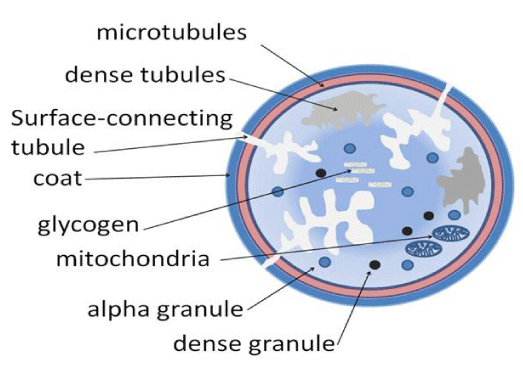
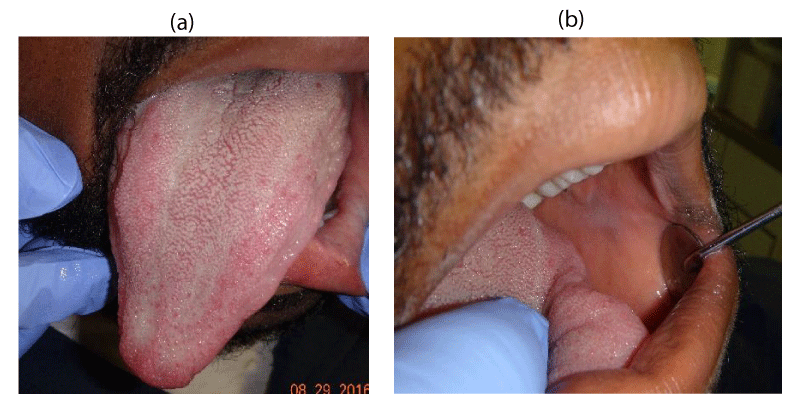
© 2017 Zanakis SN, et al. This is an open-access article distributed under the terms of the Creative Commons Attribution License, which permits unrestricted use, distribution, and reproduction in any medium, provided the original author and source are credited.Idiopathic thrombocytopenic purpura (ITP) is an abnormal decrease of platelets of unknown etiologic causes. Clinical manifestations include muco-cutaneous bleeding (petechia, purpura, ecchymosis), epistaxis and/or GI bleeding. Diagnosis is made by exclusion of other causes e.g. lab error, drug or medication interaction or an infection. Prevention and control of bleeding is the most important action to do before treating the condition. This is done by transfusion of platelets. The treatment consists of steroid therapy, Anti-D immunoglobulin [1,2,3], Thrombopoietin receptor agonists or even splenectomy in some severe cases. We are presenting a case of severe ITP that was identifi ed in our dental clinic for an initial screening, our patient was admitted to the hospital and treated successfully with steroids, he presented with multiple oral and cutaneous lesions.
Introduction
Case Report
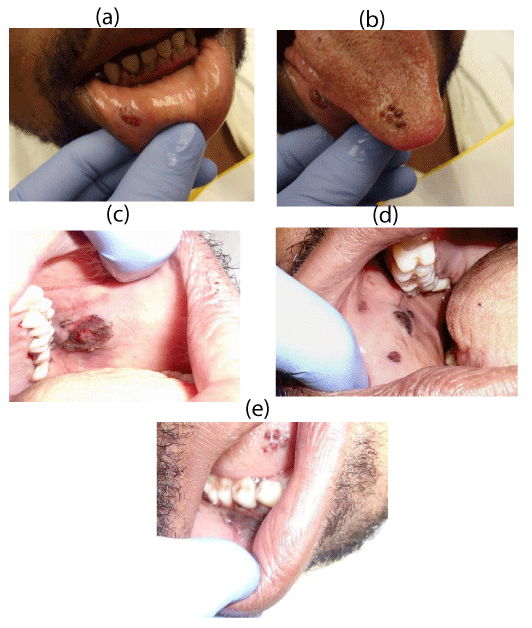
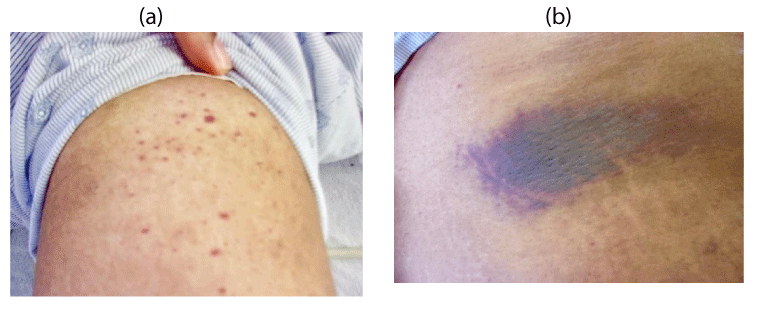
Histological findings
The tumor consisted of spindle cells arranged in fascicles, short whorls or diffusely. The cells demonstrate moderate atypia and the mitotic range was 4 mitoses / 10 high power fields. In some areas the cells grow around dilated vessels showing a hemangiopericytomatoid pattern. There were no necrotic areas. Additionally, reactive bone production was also seen, especially at the periphery of the lesion. The lesion was also infiltrating the pre-existing mandibular bone, expanding into the surrounding tissues. Immunohistochemically the tumor cells showed strong positivity against Vimentin, CD34, CD99 and Bcl-2 (Figure 4).
Discussion
SFTs are uncommon spindle cell neoplasms of mesenchymal origin [8]. Over 50% of these tumors are located in the thoracic cavity, but extrathoracic tumors have been reported in many sites including the liver, adrenal gland, skin, head and neck etc., [2]. In the head and neck, the most commonly affected site is the oral cavity. The most prevalent site is the buccal mucosa followed by the tongue and the lower lip [5]. Cases have been also documented in the orbit, nose and paranasal sinuses, parapharyngeal space, larynx, major salivary glands and thyroid gland. The association of SFTs with the oral cavity, particularly the buccal mucosa, has led to the suggestion that SFT may be associated with trauma [9]. The histopathogenesis of SFT is still controversial. Recent studies have indicated a mesenchymal origin rather than a mesothelial one, which was originally postulated [2,10]. If SFTs originate from immature mesenchymal cells with pluripotential differentiation, they can arise in any mesenchymal tissue of the body including the oral cavity [10]. SFT originating in bone and especially in the mandible has not been previously documented. To our knowledge, this is the first case of SFT arising in the mandible as an intraosseous lesion and spreading to the surrounding tissue, published in the English language literature. On CT the main characteristics were the osteolysis and the extension to the adjacent tissues. The spreading pattern clearly indicates that the tumor was originally located within the mandible. Although such kind of tumors may present with other systemic symptoms, some cases are incidental radiological findings [11]. There are no absolute distinctive diagnostic imaging features. Certain radiographic characteristics may be suggestive and should alert the inclusion of the SFT in the differential diagnosis. The most prominent feature of SFTs on CT and MRI, is that of a well-defined, isodence densely enhancing lesion[9]. Regressive remodeling of adjacent bone is the most common radiographic osseous finding, since most SFTs are benign and slow growing lesions. Nevertheless, the presence of obvious bone destruction is generally associated with more aggressive tumors and the possibility of malignancy should be considered, although this is not always the case [9]. It has been reported [12] that diagnosis can aided by fine-needle aspiration cytology. This is not supported by the literature and certainly does not apply in the case under discussion. As SFTs, hemangiopericytomas also stain positive for CD34. Some authors [8,13], report that the presence of a basement membrane in hemangiopericytomas also allows them to be distinguished from SFTs. However, it is now generally accepted that the determination of hemangiopericytomas as a separate entity from SFTs may become obsolete because of their histopathologic features, which highly resemble cellular areas of SFTs [14]. The fourth edition of the WHO Classification of Tumours of Soft Tissue and Bone, published in 2013, classifies SFT and malignant SFT, as intermediate (rarely metastasizing) lesions. The term hemangiopericytoma is abandoned, used only to describe pattern of morphology [15]. The clinical and histological diagnosis of an SFT may present difficulties in distinguishing this entity from other spindle-cell tumors. Immunohistochemistry helps in the distinction of SFTs from other soft tissue sarcomas including synovial sarcoma, benign fibrous histiocytoma, dermatofibrosarcoma protuberans, myofibroma, fibroma, and neurogenic tumors [9]. CD34 is a marker for healthy endothelium and has been found to stain primitive mesenchymal stromal cells and several mesenchymal tumors. All malignant SFTs and 77% of benign SFTs stained positive for CD34 in one study [16]. Therefore, the expression of conventional immunohistochemical markers such as vimentin, CD34, and CD99 might be important in the differential diagnosis of SFT from other spindle cell neoplasms. The absence of S-100 protein is essential for ruling out myogenic, peripheral nerve sheath, fibroblastic and fibrohistocytic neoplasms with spindle cell features [5,6,17]. An estimated 5% to 20% of thoracic SFTs may have malignant features. On the other hand, malignant extrathoracic tumors are rare. The diagnosis of malignancy is based on both clinical features and histologic findings [9]. Surgery is recognized as the treatment of choice. The majority of SFTs are considered to be benign tumors; and the recommended management is complete surgical resection. In cases of positive resection margins patients should receive adjuvant radiation therapy [9]. Factors that predispose to local recurrence in non–head and neck SFTs, are tumor diameter larger than 10 cm, presence of a malignant component, and positive surgical margins [2]. Other authors also reported that the most important prognostic factor was resectability [3]. In head and neck tumors, the high rate of positive margins reflects more likely the tumor location rather than its biologic features [3,18]. Previous reports note that 13–37% of SFTs were associated with local recurrence or histological malignancy. A tumor recurrence has been described 31 years after surgical excision. Therefore, long-term follow-up is necessary even in cases with findings suggestive of benignity [3,11].
Conclusion
Solitary fibrous tumors of the head and neck region are extremely rare. The characteristic features of these tumors seen on CT or MRI, in conjunction with a benign slow-growing clinical behavior, may help in the diagnosis. Definitive diagnosis is usually made only after tumor resection. These tumors can be surgically excised, and patients who undergo complete surgical resection and do not have any malignant component, can expect a favorable outcome. However, patients with positive surgical margins or patients whose tumors have a malignant component may benefit from adjuvant postoperative radiation therapy [9].
- Klemperer P, Rabin C (1931) Primary neoplasms of the pleura: a report of five cases. Arch Pathol 11: 385–412. Link: https://goo.gl/C32psm
- Gold JS, Antonescu CR, Hajdu C, Ferrone CR, Hussain M, Lewis JJ et al. (2002) Clinicopathologic correlates of solitary fibrous tumors. Cancer 94: 1057-1068. Link: https://goo.gl/15003Y
- England DM, Hochholzer L, McCarthy MJ (1989) Localised benign and malignant fibrous tumors of the pleura: a clinicopathologic review of 223 cases. Am J Surg Pathol 13: 640-658. Link: https://goo.gl/pcGXMi
- Perros P, Simpson J, Innes JA, Teale JD, McKnight JA (1996) Non-islet cell tumour-associated hypoglycaemia: 111In-octreotide imaging and efficacy of octreotide, growth hormone and glucocorticosteroids. Clin Endocrinol 44: 727-731. Link: https://goo.gl/BKLc51
- Alawi F, Stratton D, Freedman P (2001) Solitary fibrous tumor of the oral soft tissues: a clinicopathologic and immunohistochemical study of 16 cases. Am J Surg Pathol 25: 900–910. Link: https://goo.gl/fmzbWT
- Hanau CA, Miettinen M (1995) Solitary fibrous tumor: histological and immunohistochemical spectrum of benign and malignant variants presenting at different sites. Hum Pathol 26: 440–449. Link: https://goo.gl/n1eIev
- Brunnemann RB, Ro JY, Ordonez NG, Mooney J, El-Naggar AK, et al. (1999) Extrapleural solitary fibrous tumor: a clinicopathologic study of 24 cases. Mod Pathol 12: 1034–1042. Link: https://goo.gl/XjBrtO
- Enzinger FM, Weiss SW (1995) Soft Tissue Tumors. 3rd ed. New York, Mosby 31: 351-380. Link: https://goo.gl/3qWXId
- Ganly I, Patel GS, Stambuk EH, Coleman M, Ghossein R, et al.(2006) Solitary fibrous tumors of the head and neck: a clinicopathologic and radiologic review. Arch Otolaryngol Head Neck Surg 132: 517-525. Link: https://goo.gl/ltEkfZ
- Sawada N, Ishiwata T, Naito Z, Maeda S, Sugisaki Y, A et al. (2002) Immunohistochemical localization of endothelial cell markers in solitary fibrous tumor: Pathol Int 52: 769–776. Link: https://goo.gl/iUAtKq
- Sato J, Asakura K, Yokoyama Y, Satoh M (1998) Solitary fibrous tumor of the parotid gland extending to the parapharyngeal space. Eur Arch Otorhinolaryngol 255: 18–21 Link: https://goo.gl/DWx8wQ
- Ali SZ,Hoon V, Hoda S, Heelan R, Zakowski MF (1997) Solitary fibrous tumor: a cytologic-histologic study with clinical, radiologic and immunohistochemical correlations. Cancer Cytopathology 81: 116-121. Link: https://goo.gl/tcRDvi
- Enzinger FM, Smith BH (1976) Hemangiopericytoma: an analysis of 106 cases. Hum Pathol 7: 61-82. Link: https://goo.gl/6utDBM
- Guillou L, Fletcher JA, Fletcher CDM, Mandahl N (2002) Extra pleural solitary fibrous tumour and hemangiopericytoma. In: Fletcher CDM, Unni KK, Mertens F, eds. World Health Organization classification of tumours: pathology and genetics of tumours of soft tissue and bone. 86-90, Lyon, France: IARC Press. Link: https://goo.gl/QUQ1PN
- Al Saanna G, Bovée J, Hornick J, Lazar A (2013) A Review of the WHO Classification of Tumours of Soft Tissue and Bone. 4th ed. WHO. Link: https://goo.gl/soaSxmb
- Flint A, Weiss SW (1995) CD-34 and keratin expression distinguishes solitary fibrous tumor (fibrous mesothelioma) of the pleura from desmoplastic mesothelioma. Hum Pathol 26: 428-431. Link: https://goo.gl/Nlk10Q
- Jordan RCK, Regezi JA (2003) Oral spindle cell neoplasms: a review of 307 cases. Oral Surg Oral Med Oral Pathol Oral Radiol Endod 95: 717–724. Link: https://goo.gl/jubCEL
- Langman G (2011) Solitary fibrous tumor: A pathological enigma and clinical dilemma. J Thorac Dis 3: 86–87. Link: https://goo.gl/6ZEJEp



 Save to Mendeley
Article Alerts
Subscribe to our articles alerts and stay tuned.
 This work is licensed under a Creative Commons Attribution 4.0 International License.