Archives of Otolaryngology and Rhinology
External Esophagotomy for Removal of a Vulnerable Foreign Body from the Esophagus: Case Report
1Department of Surgery and Surgical Specialties, Faculty of Medicine, Pharmacy and Odontology (FMPO), Cheikh Anta Diop University, Dakar; Hôpital Principal de Dakar, BP 5005, Dakar, Senegal
2Hôpital Principal de Dakar, Dakar, Senegal
3Cheikh Anta Diop University, Dakar, Senegal
Author and article information
Cite this as
Loum B, et al. External Esophagotomy for Removal of a Vulnerable Foreign Body from the Esophagus: Case Report. Arch Otolaryngol Rhinold. 2026; 12(1): 1-4. Available from: 10.17352/2455-1759.000164
Copyright License
© 2026 Loum B, et al. This is an open-access article distributed under the terms of the Creative Commons Attribution License, which permits unrestricted use, distribution, and reproduction in any medium, provided the original author and source are credited.Introduction: Endoscopic removal of a dangerous foreign body can pose a risk of complications such as perforation of the digestive tract. In this case, cervicotomy is a highly effective alternative. In this topic, the authors describe the extraction by esophagotomy of a denture with four teeth and two metal clasps performed in the ENT department of Hopital Principal de Dakar.
Patient: A 22-year-old patient, with no known medical history, was referred by another hospital and admitted to our structure 4 days after ingestion of a foreign body, such as a denture. The accident occurred following a seizure, due to an epileptic crisis, after the announcement of his brother's death.
A standard chest X-ray revealed a metallic-looking image at the cervical esophagus at C5, resembling the clasps of a denture.
He underwent endoscopic extraction under general anesthesia without success. External extraction was done after antibiotic and corticosteroid therapy.
The postoperative course was marked by mild dysphonia, and endoscopy revealed hypomobility of the left vocal cord. The patient was fed through a nasogastric tube for two weeks. An esophago-gastro-duodenal transit was performed to ensure the absence of an esophagotracheal fistula, and a swallowing test was performed before oral feeding.
Conclusion: External esophagotomy is an effective and safe alternative for the removal of dangerous foreign bodies. ENT specialists should keep this in mind to avoid fatal complications of forced endoscopic removal.
Intraesophageal foreign bodies are a common emergency in ENT practice. This frequency is more pronounced in children but can affect all age groups depending on habits and diet [1].
They are a source of multiple complications: esophageal perforations, cellulitis, strictures, etc., hence the need for appropriate and adequate management.
This management is primarily endoscopic. Surgery is rare but still has its place in treatment [2].
Observation
The authors describe the extraction by esophagotomy of a denture with four teeth and two metal clasps performed in the ENT department of Hopital Principal de Dakar.
A 22-year-old patient with no known medical history, referred by another hospital and admitted to our structure 4 days after ingestion of a foreign body, such as a denture. The accident occurred following a convulsive seizure, on the grounds of an unmonitored epileptic condition, after the announcement of his brother's death.
Upon admission, the patient complained of chest pain associated with dysphagia, odynophagia, and hypersalivation.
A standard chest X-ray revealed a metallic-looking image resembling denture clasps in the cervical esophagus at C5 (Figure 1).
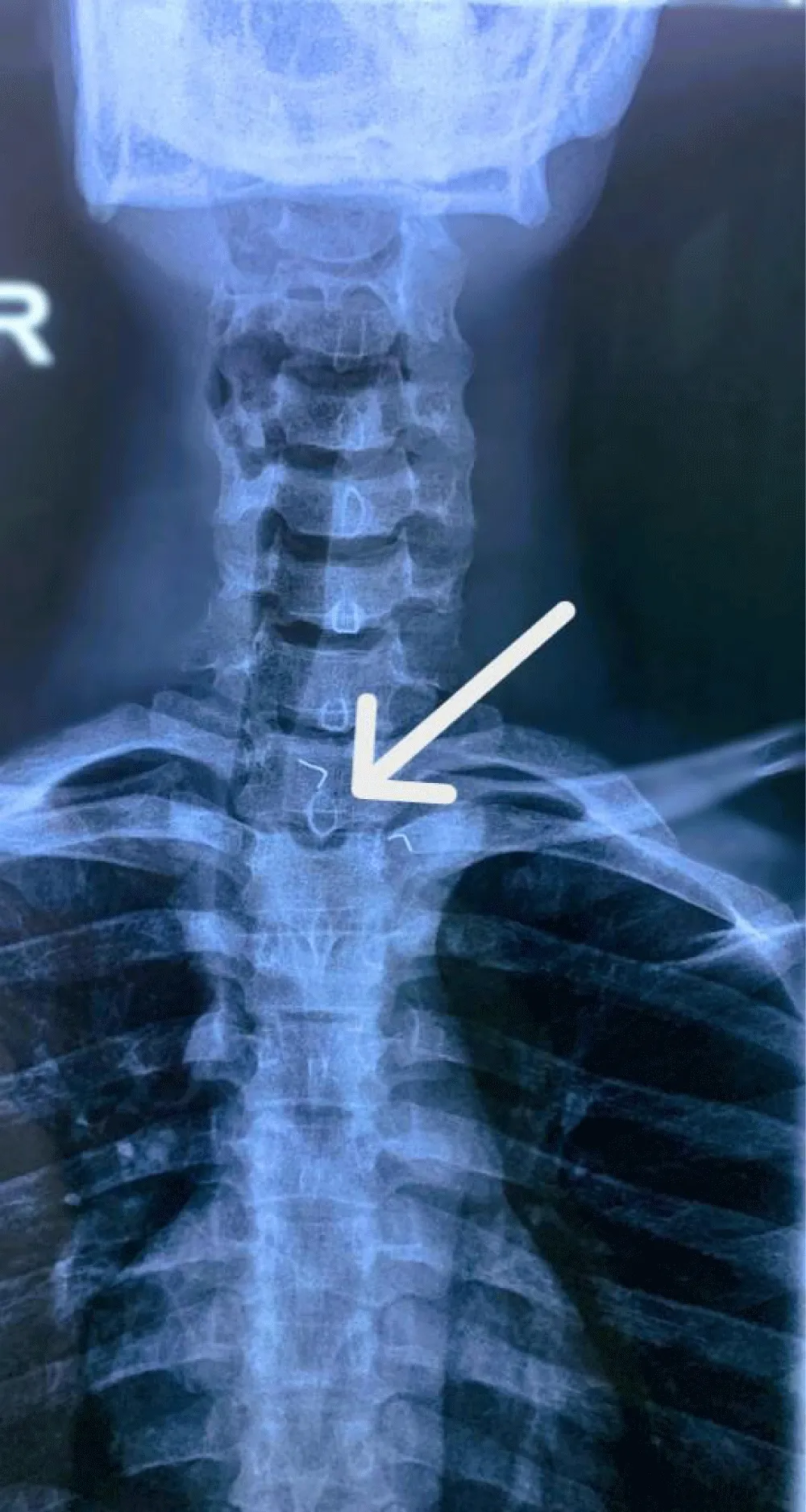
He underwent endoscopic extraction under general anesthesia, 6 hours after his admission, without success. External extraction was indicated after antibiotic and corticosteroid therapy.
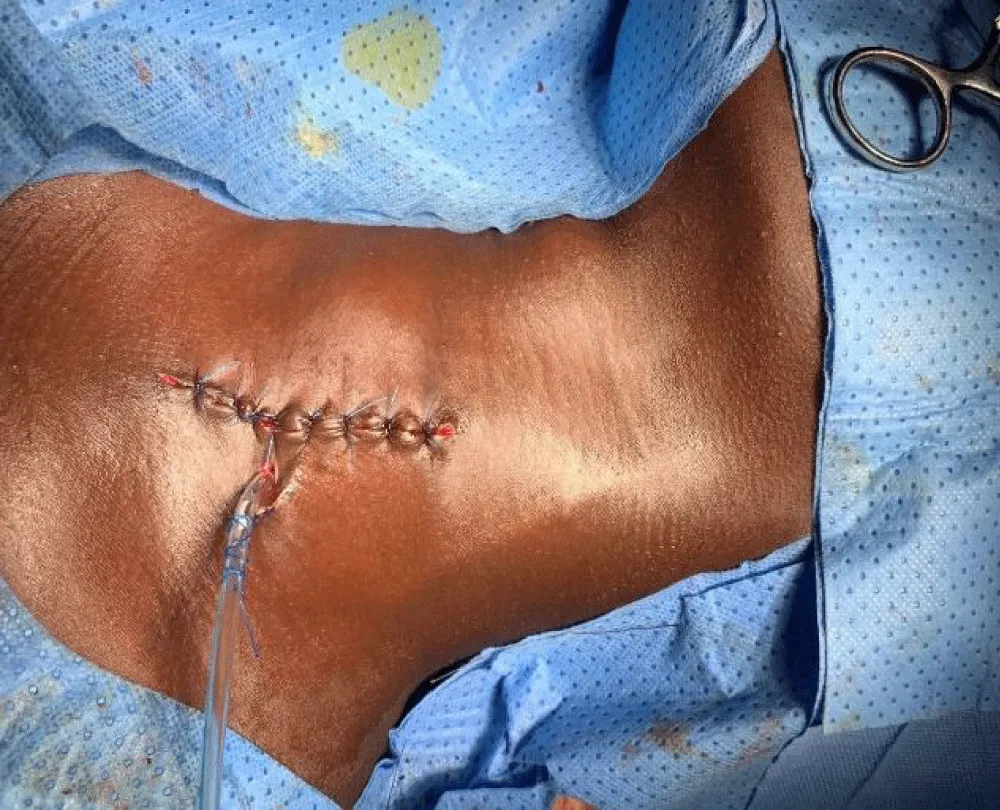
On day 5, the foreign body was removed following an external esophagotomy (Figures 2-5).
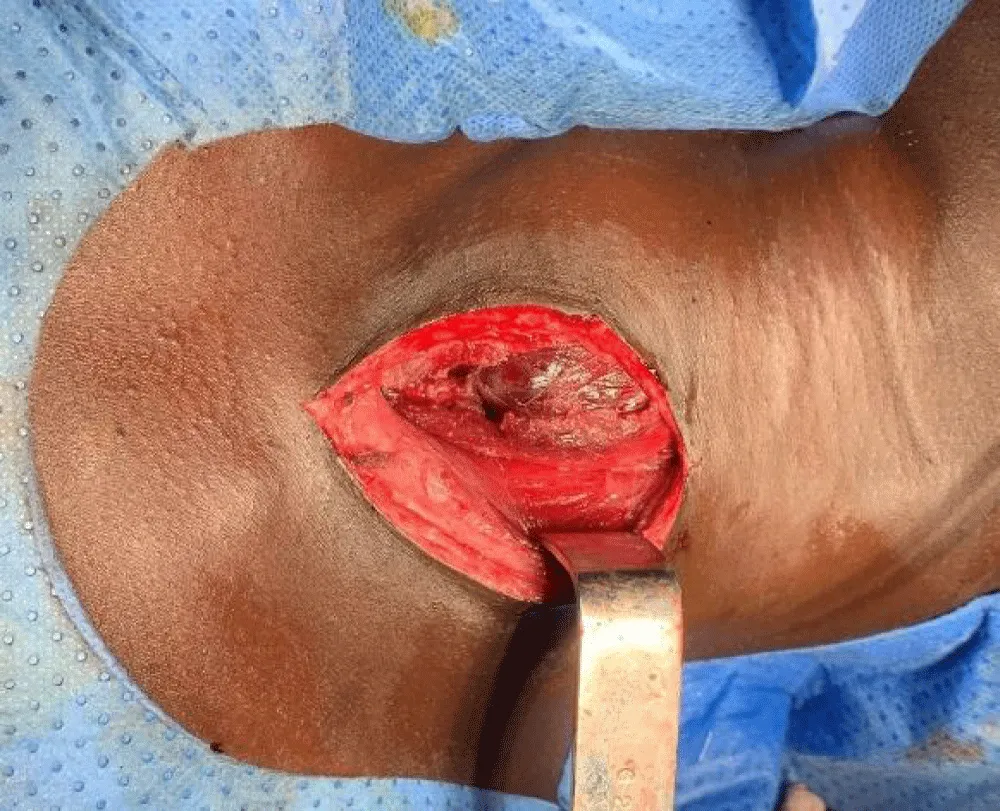
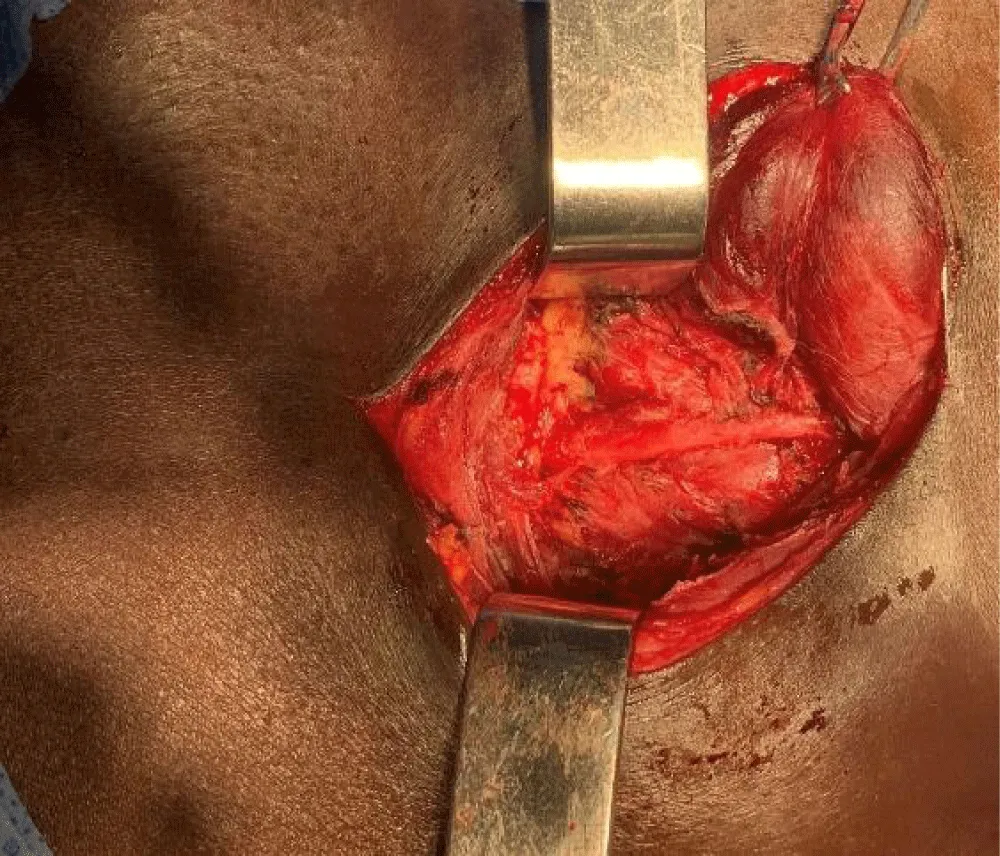
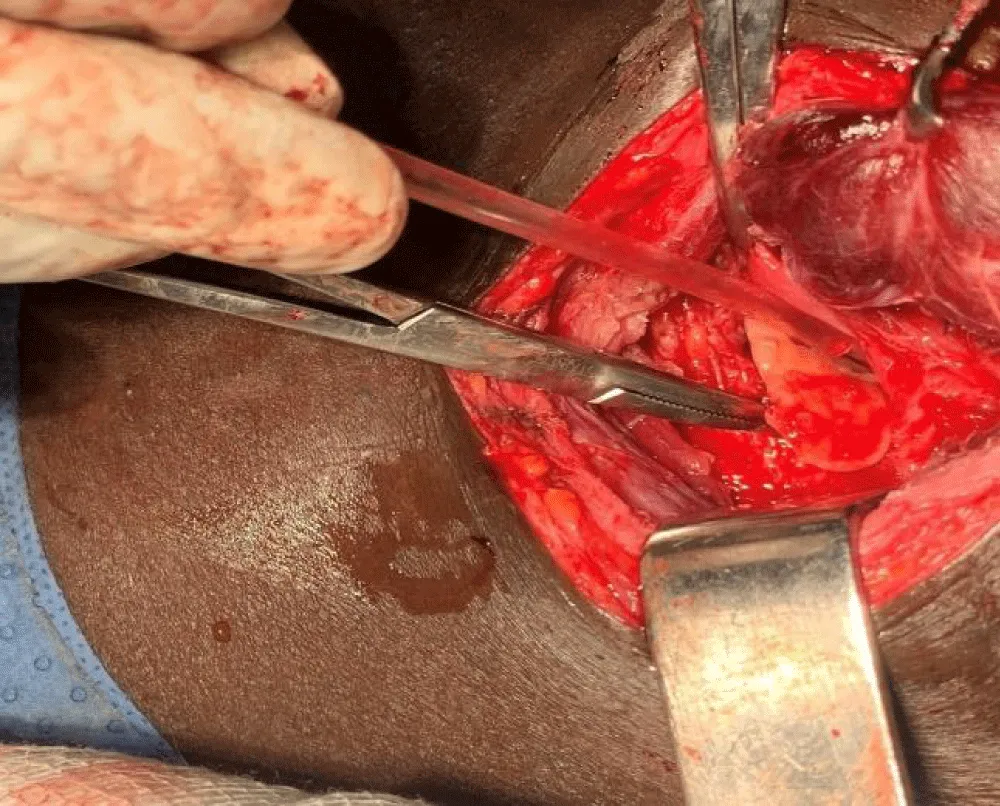
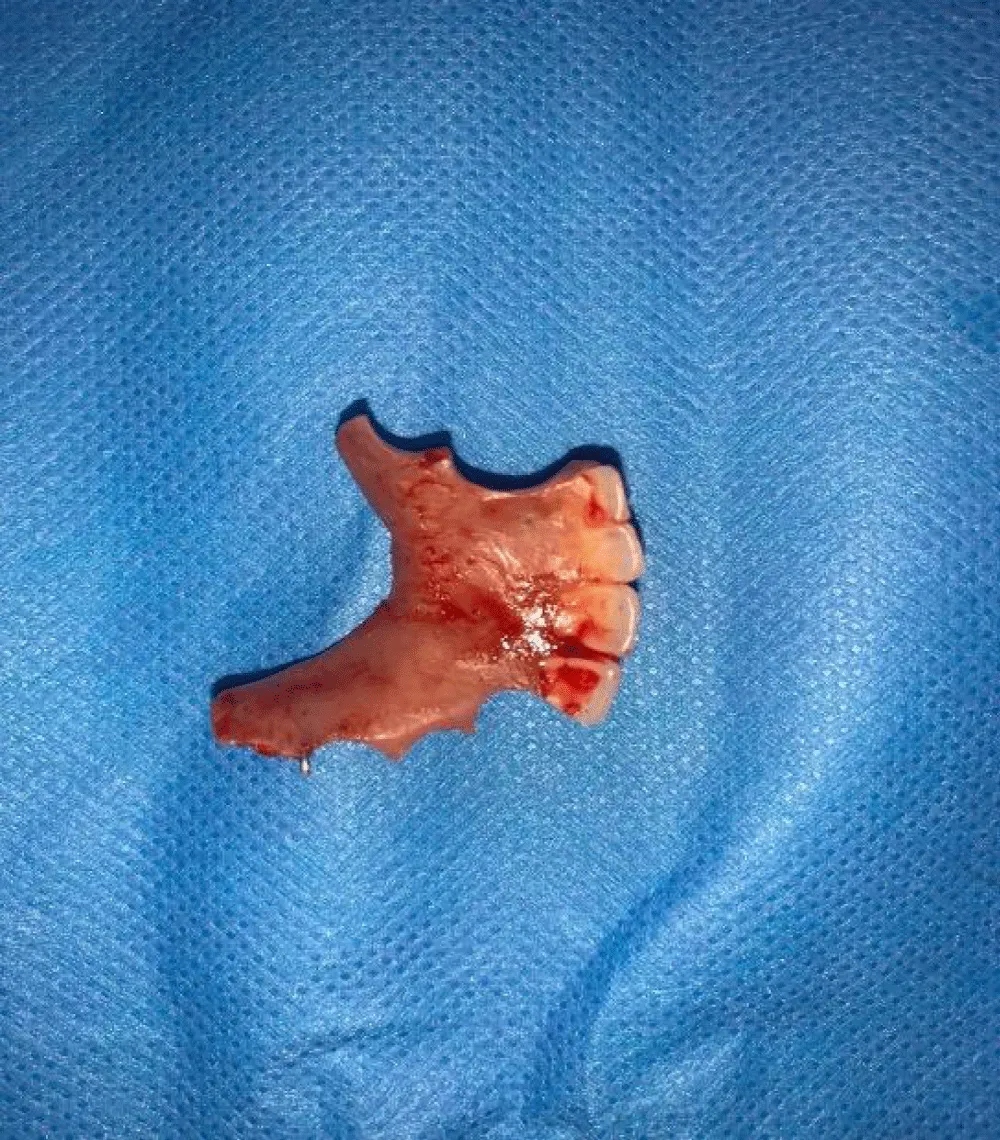
The foreign body was a denture with four teeth and two metal clasps (Figure 6).
The postoperative course was marked by mild dysphonia, and endoscopy revealed hypomobility of the left vocal cord. The patient was fed through a nasogastric tube for two weeks. But he stayed in the hospital for a week after the extraction and was then followed up at home. An upper gastrointestinal series was performed to ensure the absence of a tracheoesophageal fistula, and a swallowing test was performed before oral feeding.
Discussion
Epidemiology
Frequency: Despite their high frequency and severity, childhood accidents are poorly documented in developing countries, particularly in sub-Saharan Africa, where infectious diseases and malnutrition are the primary concerns [3]. However, the number of years of life lost and disabilities due to domestic accidents is much higher in these countries than in developed countries [3].
Foreign body ingestion is a common reason for emergency consultations in ENT departments [1], particularly for esophageal injuries, which constitute an emergency.
Esophageal localization of foreign bodies is an emergency due to the risk of impaction in areas of stricture, exposing them to serious complications.
The risk of complications is increased in the case of dangerous foreign bodies, often identified for their toxic nature, such as button batteries [4] or vulnerable ones [5-7].
However, surgical indications, particularly cases of extraction by cervicotomy, are rare and described in often old publications [1,2,8].
Dentures are among these dangerous foreign bodies due to their volume, the presence of roughness, and especially the presence of metal clasps.
Age, sex, and background: Intracervical foreign bodies are prevalent in male children. However, dentures are often found in older adults [3].
In our study, the foreign body was found in a young adult. However, he presented a neglected neurological condition and a low socioeconomic status. In addition to these aspects, the psychiatric background is also described by some authors in the literature [9].
Radiological examination
According to the recommendations of the European Society of Gastrointestinal Endoscopy, standard radiography allows the exploration of radiopaque foreign bodies, which was the case with our patient. CT scanning is recommended in case of complications or if surgical intervention is necessary. It therefore allows for the detection of an esophageal perforation or to confirm the exact location of the foreign body before the procedure [10]. We were unable to do this due to a lack of resources for our patients, as well as our concern about delaying care.
Surgical treatment
According to Chevalier's Law, "any foreign body that has entered the natural esophagus can be extracted through the same routes unless it has migrated [11]. For the therapeutic perspective, the recommendations of the European Society of Gastrointestinal Endoscopy (ESGE) support urgent endoscopy within 2 to 6 hours in cases of complete esophageal obstruction (hypersalivation, aphagia) as was the case with our patient, ingestion of sharp or pointed objects, or batteries in the esophagus due to an increased risk of tracheobronchial aspiration and/or complications such as perforation or toxic lesions of the esophagus that can cause liquefactive necrosis and transmural perforation [12]. Endoscopy can be postponed and performed within 24 hours in cases of foreign bodies in the esophagus that do not meet the previous criteria or if they have already passed into the stomach [12]. However, endoscopic extraction, while possible in many cases, can be dangerous for certain foreign bodies. The main danger will then be a risk of esophageal perforation, which can be life-threatening. This explains the need for a surgical approach via cervicotomy (our patient).
The decision will take into account the nature of the foreign body, its size, and its position.
The main indications are
- A risk of complications [13,14].
- An unsuccessful attempt at endoscopic extraction
- An unsuitable technical platform and difficult operating conditions
- The surgeon's skills
The surgical approach is primarily performed on the left due to certain anatomical features (the esophagus extends beyond the trachea on the left, and the recurrent nerve constitutes an obstacle that is more difficult to control). However, some authors [4,15] have proposed the right approach based on the location of the foreign body.
Conclusion
External esophagotomy is an effective and safe alternative for the removal of dangerous foreign bodies. ENT specialists should keep this in mind to avoid fatal complications of forced endoscopic removal. External esophagotomy stands as an effective and safe alternative for extracting dangerous foreign bodies from the esophagus, particularly when endoscopic attempts fail or pose excessive risks, such as perforation. In this case, the successful removal of a denture with sharp metal clasps via left cervicotomy highlights its utility in resource-limited settings like sub-Saharan Africa, where advanced imaging or endoscopy may be unavailable. The procedure's left-sided approach minimizes complications by accommodating anatomical features, including the recurrent laryngeal nerve, though vigilant postoperative monitoring for dysphonia and fistulas remains essential, as evidenced by the patient's transient left vocal cord hypomobility and nasogastric feeding. ENT specialists must consider this surgical option for vulnerable objects like dentures to avert life-threatening issues from forced endoscopy, aligning with ESGE guidelines on high-risk cases. Ultimately, timely recognition and tailored intervention enhance patient outcomes in esophageal foreign body emergencies.
Conflicts of interest: The authors declare that they have no conflicts of interest in the writing of this article.
- Deguenonvo Rea, Ndiaye M, Loum B, Tall A, Diallo BK, Ndiaye IC, et al. Foreign bodies of the esophagus: a report of 212 cases. Med Afr Noire. 2009;56(7):410–416. Available from: https://www.santetropicale.com/manelec/fr/resume_oa.asp?id_article=1673
- Mohamed A. Cervicotomy for removal of an esophageal foreign body: a case report. Med Afr Noire. 1993;40(4). Available from: https://www.santetropicale.com/Resume/44011.pdf
- Ka AS, Imbert P, Diagne I, Seye MN, Gerardin P, Guyon P, et al. Epidemiology and prognosis of childhood accidents in Dakar, Senegal. Med Trop. 2003;63:533–538. Available from: https://pubmed.ncbi.nlm.nih.gov/14763311/
- Thiam A, Loum B, Ndiaye M. An unusual foreign body of the oropharynx. Med Afr Noire. 2012;59(6):293–296. Available from: https://www.scirp.org/reference/referencespapers?referenceid=1874047
- Kunin N, Wong N, Faucomprez S, Kerneis J, Ferrand L, Daaboul M, et al. An unusual foreign body in the esophagus. J Chir. 2008;145(5):479–480. Available from: https://www.em-consulte.com/article/737968/un-corps-etranger-inhabituel-dans-loesophage-an-un
- Gyebre YMC, Ouattara M, Elola E, Sereme M, Konsem T, Ouedraogo PB, et al. An unusual foreign body of the esophagus. J Tunis ORL Chir Cervicofac. 2012;28:80–82. Available from: https://revuesciences-techniquesburkina.org/index.php/sciences_de_la_sante/article/view/510
- Niang F, Loum B, Fall F, Teffoue D, Ndiaye C, Ndour N, et al. Unusual cervical migration of an esophageal foreign body (fish bone): a case report. Health Sci Dis. 2023;24(12):120–122. Available from: https://doi.org/10.5281/hsd.v24i12.5049
- Toshima T, Morita M, Sadanaga N, Yoshida R, Yoshinaga K, Saeki H, et al. Surgical removal of a denture with sharp clasps impacted in the cervicothoracic esophagus: report of three cases. Surg Today. 2011;41(9):1275–1279. Available from: https://doi.org/10.1007/s00595-010-4467-x
- Heger P, Weber TF, Rehm J, Pathil A, Decker F, Schemmer P. Cervical esophagotomy for foreign body extraction: case report and comprehensive review of the literature. Ann Med Surg (Lond). 2016;7:87–91. Available from: https://doi.org/10.1016/j.amsu.2016.04.001
- Mathys P, D’Angelo F, Frossard JL, Bichard P. Management of gastrointestinal foreign bodies. Rev Med Suisse. 2020;16:1560–1563. Available from: https://pubmed.ncbi.nlm.nih.gov/32880112/
- Jackson C. The life of Chevalier Jackson: an autobiography. New York: The MacMillan Company; 1939.
- Birk M, Bauerfeind P, Deprez PH, Häfner M, Hartmann D, Hassan C, et al. Removal of foreign bodies in the upper gastrointestinal tract in adults: European Society of Gastrointestinal Endoscopy (ESGE) clinical guideline. Endoscopy. 2016;48:489–496. Available from: https://doi.org/10.1055/s-0042-100456
- Yao CC, Wu IT, Lu LS, Lin SC, Liang CM, Kuo YH, et al. Endoscopic management of foreign bodies in the upper gastrointestinal tract of adults. BioMed Res Int. 2015;2015:1–6. Available from: https://doi.org/10.1155/2015/658602
- Michaud L, Bellaïche M, Olives JP. Ingestion of foreign bodies in children: recommendations of the Francophone Group of Pediatric Hepatology, Gastroenterology and Nutrition. Arch Pediatr. 2009;16(1):54–61. Available from: https://doi.org/10.1016/j.arcped.2008.10.018
- Zanchetta M, Monti E, Latham L, Costa J, Marzorati A, Odeh M, et al. Dental prosthesis in the esophagus: a right cervicotomic approach. Life (Basel). 2022;12(8):1170. Available from: https://doi.org/10.3390/life12081170



 Save to Mendeley
Article Alerts
Subscribe to our articles alerts and stay tuned.
 This work is licensed under a Creative Commons Attribution 4.0 International License.